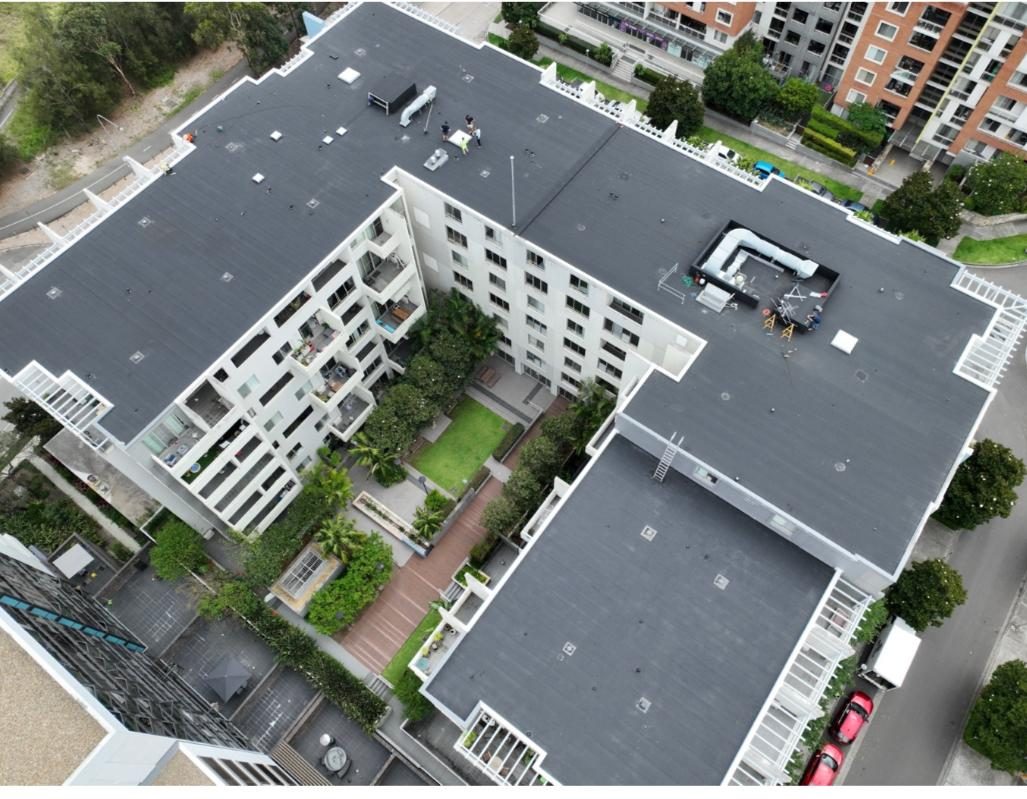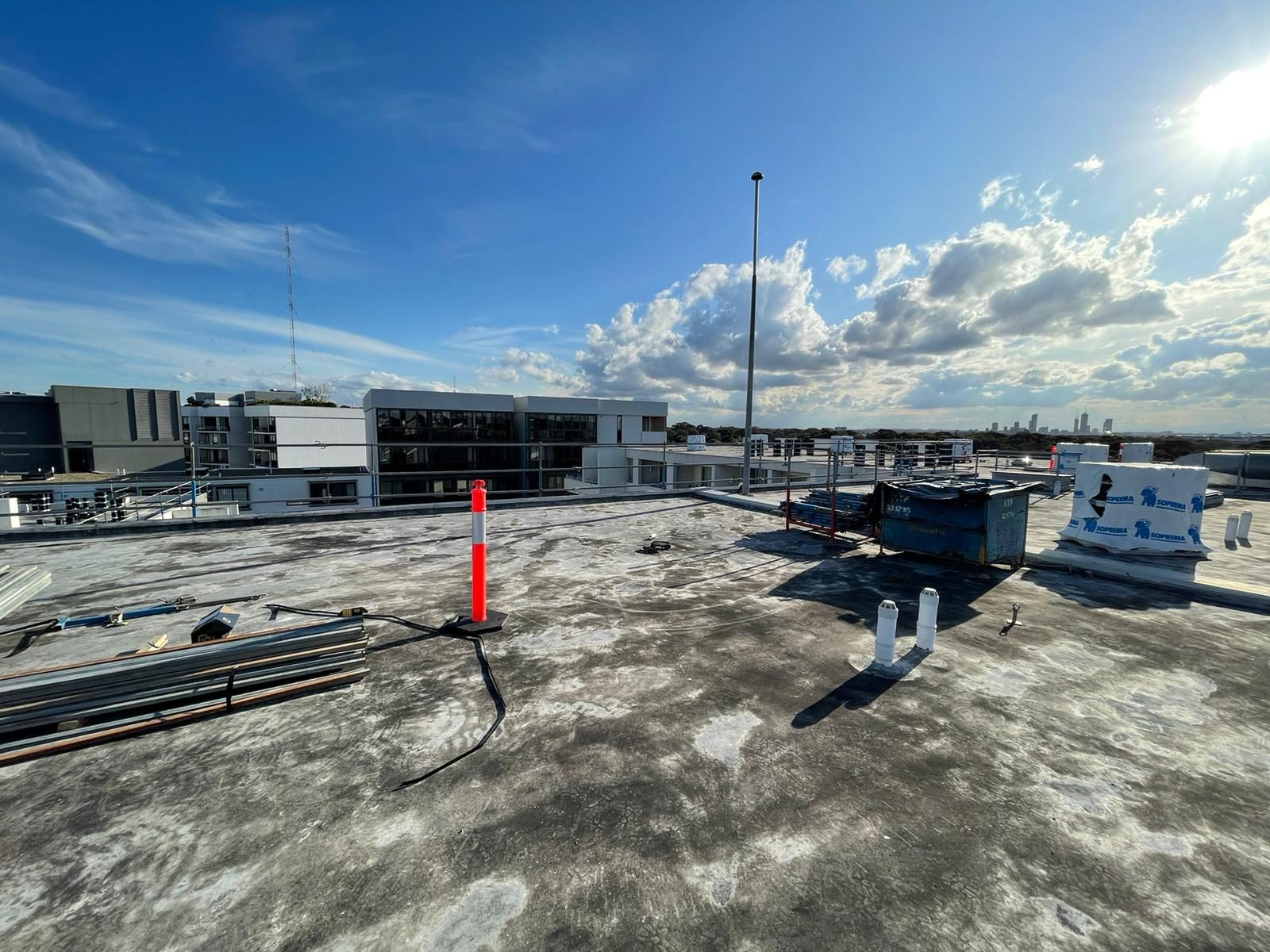
Cutting a concrete slab, chasing a masonry wall, grinding back a balcony edge, removing old tiles. These are routine tasks on remedial and refurbishment jobs, and many of them create fine dust from materials that contain crystalline silica. When the work happens in an occupied strata building, office or retail centre, residents, tenants and staff are often only a door or a corridor away.
October is National Safe Work Month, and silica remains a NSW Government priority. This article explains in plain terms what the rules cover and the practical questions owners, strata committees and building managers can ask a contractor before dust-generating work starts.
What has happened
On 1 October 2026 the NSW Government announced the Lung Bus visit to south-west Sydney. The release states that since its upgrade in February 2025 the Lung Bus has screened 4,069 workers, with one in 10 returning an abnormal or incidental finding. It also states that 19,507 workers across more than 860 businesses have been registered since the Silica Worker Register was launched on 1 October 2025.
These figures sit alongside rules that are already in force in NSW:
- The ban on engineered stone benchtops, slabs and panels commenced on 1 July 2024. SafeWork NSW notes that removal, repair, minor modification and disposal of engineered stone already installed is still permitted, with controls.
- Employers must notify workers undertaking high risk crystalline silica processing to the Silica Worker Register within 28 days of that work starting.
- SafeWork NSW’s code of practice on managing respirable crystalline silica commenced on 20 February 2026.
Why remedial and refurbishment work is affected
Silica is not only an engineered stone issue. SafeWork NSW lists common building materials that contain crystalline silica, including concrete and mortar (25 to 70 per cent), bricks (up to 30 per cent), sandstone (70 to 100 per cent) and granite (20 to 45 per cent).
Safe Work Australia’s construction guidance on silica identifies tasks such as brick, concrete or stone cutting (especially using dry methods), and angle grinding, jack hammering and chiselling of concrete or masonry. These are everyday tasks in concrete repair, balcony and façade work, and internal refurbishment.
SafeWork NSW describes processing as high risk where it is reasonably likely to result in a risk to the health of a person at the workplace. Under its guidance on working safely with crystalline silica, high risk work needs a silica risk control plan, although for construction work a Safe Work Method Statement (SWMS) may be used instead.
What it means in practice
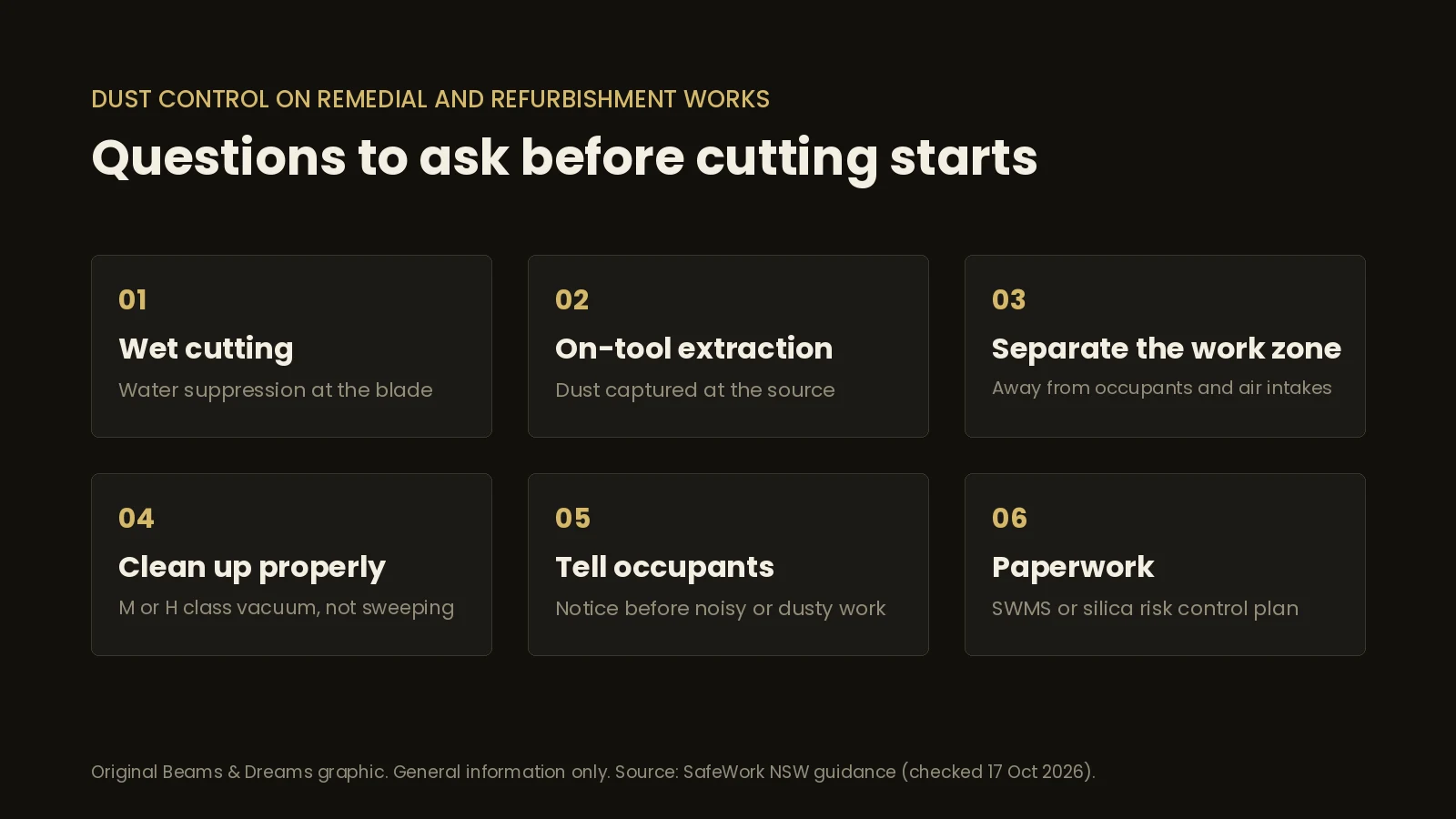
The legal duty to manage silica risk sits mainly with the contractor carrying out the work, as the business that controls it. SafeWork NSW guidance lists controls such as wet dust suppression, on-tool dust extraction, local exhaust ventilation, isolating dust-generating areas, regular cleaning and respiratory protective equipment. The code of practice refers to using M or H class industrial vacuums for clean-up rather than relying on dry sweeping or compressed air.
The code also recognises that people near the work, such as supervisors, maintenance staff and cleaners, can be exposed. In an occupied building, that is why planning matters: where the work zone sits, how it is separated, and how dust is kept out of shared spaces.
Owners, strata committees and building managers may have their own duties under work health and safety laws, depending on their role and level of control over the workplace. That is a question for a WHS adviser, not this article.
Questions owners and building managers can ask
This is general information, not WHS or legal advice. Before dust-generating work starts, it is reasonable to ask a contractor:
- Which tasks on this job are likely to create silica dust, and has the work been assessed as high risk?
- Can we see the SWMS or silica risk control plan for those tasks?
- What dust control method will be used: wet cutting, on-tool extraction, local exhaust ventilation, or a combination?
- How will the work area be separated from residents, tenants, lifts, corridors and air intakes?
- How will dust and debris be cleaned up, stored and removed from the building?
- Will air monitoring be carried out, and if so, by whom?
- Will any existing engineered stone be cut or removed, and how will that be managed?
- How and when will occupants be told about noisy or dusty work?
Clear answers help a committee or manager compare tenders fairly, plan notices to occupants and keep a record of how the work was managed.
How Beams & Dreams can help
Beams & Dreams Constructions (NSW Builder Licence 397915C, Registered Building Practitioner BUP4253866) delivers remedial works and commercial refurbishment in Sydney. We work with strata committees, building managers and owners to plan work in occupied buildings, including how work areas are sequenced around the people who use them.
Next step
If you are planning remedial or refurbishment work in an occupied building, contact our team to talk through scope, sequencing and the questions above.
Sources
- NSW Government (Minister for Work Health and Safety): Lung Bus rolls into south-west Sydney (2026-10-01, accessed 2026-10-06)
- SafeWork NSW: Crystalline silica (2025-11-28, accessed 2026-10-06)
- SafeWork NSW: Work safely with crystalline silica and engineered stone (2026-03-13, accessed 2026-10-06)
- SafeWork NSW: What are crystalline silica and engineered stone (2025-08-15, accessed 2026-10-06)
- SafeWork NSW: Code of Practice: Managing risks of respirable crystalline silica in the workplace (2026-02-20, accessed 2026-10-06)
- SafeWork NSW: Engineered stone prohibition to commence 1 July 2024 (2024-03-28, accessed 2026-10-06)
- Safe Work Australia: Silica (construction duties tool) (None, accessed 2026-10-06)
This article is general information only. It is not legal, financial, planning, engineering or compliance advice. Rules and timeframes can change. Check the official sources linked above and get advice from a qualified professional about your building or project.